
Welcome! I am Yifan Liu, a CS PhD student in Stanford University, working with Prof. Daniel Yamins (Stanford NeuroAI Lab). My primary research interest lies in computer vision, with a focus on designing machine learning systems that exhibit human-like perception and cognitive ability. My research experience includes Multimodal LLMs (VLMs), World Models, and 3D computer vision.
🔥 News
- 2026.09: Glad to join Stanford University as a CS PhD Student!
- 2026.03: 🎉🎉 SandboxVLM and RoboTAG are accepted by CVPR 2026.
- 2025.11: 🎉🎉 LLaVA-UHD v2 is accepted by AAAI 2026.
- 2025.06: Start working as a visiting research intern at Harvard University, with Prof. Hanspeter Pfister.
- 2025.06: 🎉🎉 My first first-author paper HGG is accepted by ICCV 2025.
- 2025.01: Start working as a remote research intern at Carnegie Mellon University, with Prof. Katerina Fragkiadaki.
- 2024.03: 🎉🎉 The first paper I worked on, MirageRoom, is accepted as Highlight by CVPR 2024.
- 2023.04: Start working as a research intern at Tsinghua University, with Prof. Yueqi Duan.
📝 Publications
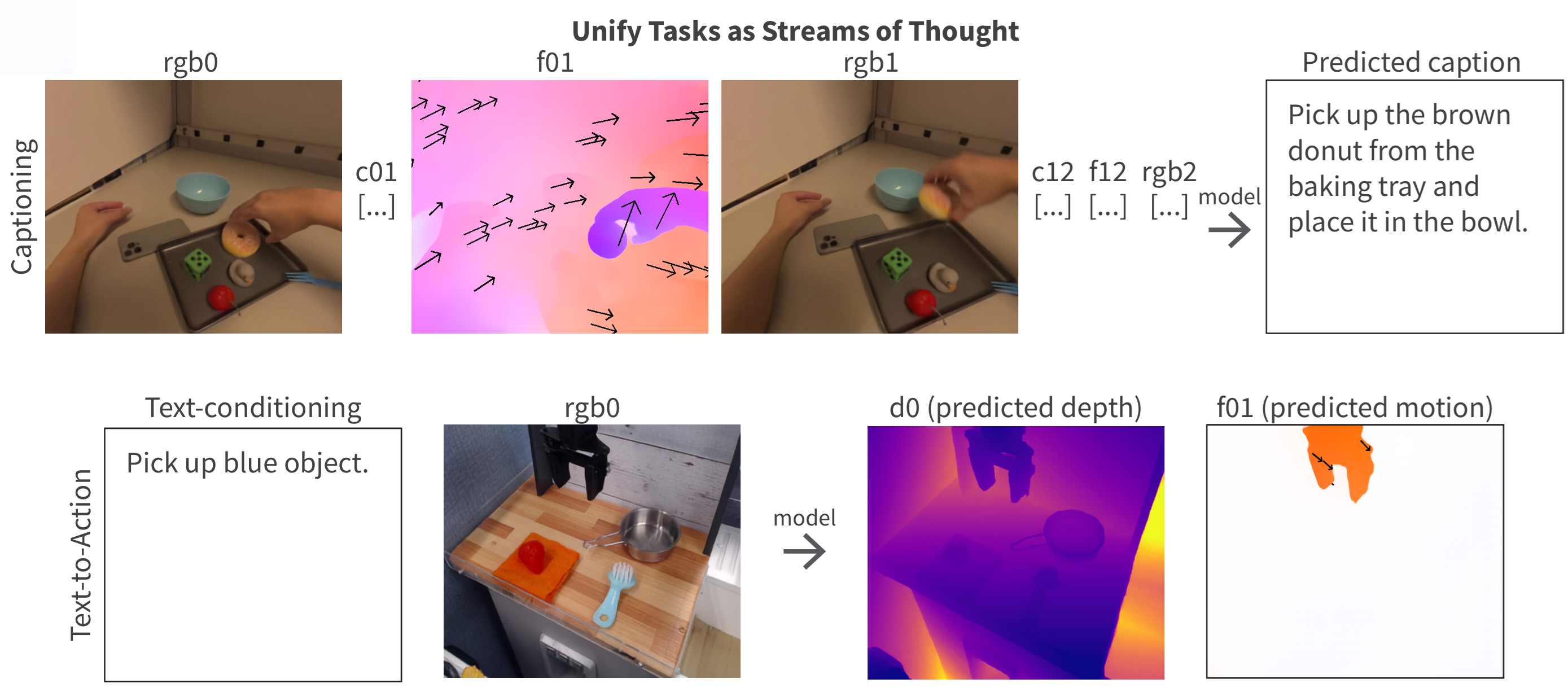
VAST: Visual Abstractions as Streams of Thought
Khai Loong Aw*, Klemen Kotar*, Baihan Zhang*, Yifan Liu, Lilian Naing Chen, Rahul Mysore Venkatesh, Atlas Kazemian, Wanhee Lee, Daniel LK Yamins
- Reasoning in vision+text for a VLM.
- VLMs (2026) mainly reason in text; chain-of-thought is a success.
- But humans do not reason in text. Can we explore an adaptive, hybrid reasoning format that emcompasses various modalities and resemble human thinking mode?
- (Discussion) Do people want a World Model natively unifiying vision and text both in the input space and in the output space?
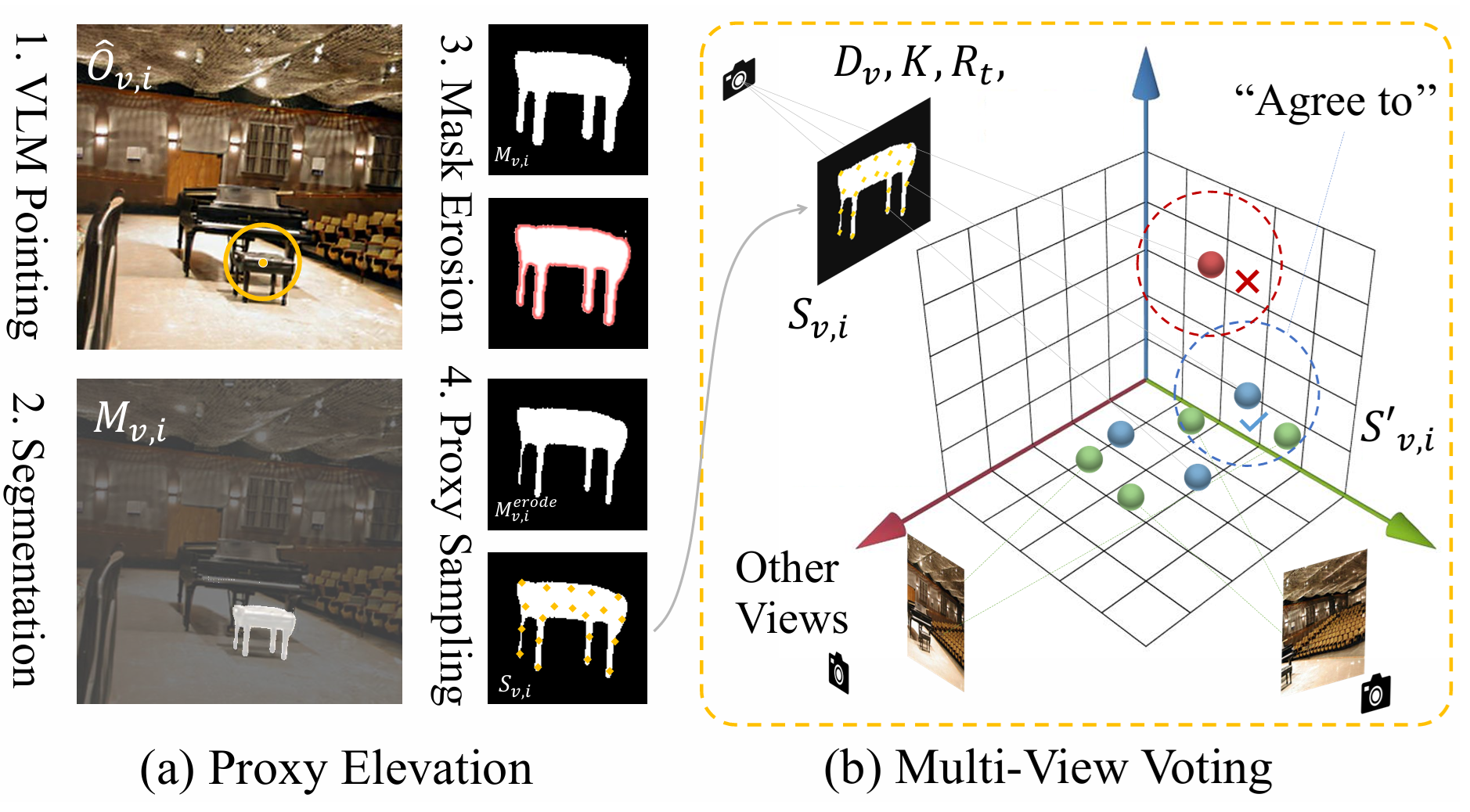
SandboxVLM: Abstract 3D Perception for Spatial Intelligence in Vision-Language Models
Yifan Liu, Fangneng Zhan, Kaichen Zhou, Yilun Du, Paul Pu Liang, Hanspeter Pfister
- Spatial Intelligence in VLMs.
- VLMs (2025) struggles with understanding spatial relationships.
- The fact that our 3D world has much more visual details than 2D images is overwhelming VLM perception. Can we SIMPLIFY the input with visual abstractions?
- (Discussion) What are other types of visual abstractions?

RoboTAG: End-to-end Robot Configuration Estimation via Topological Alignment Graph
Yifan Liu, Fangneng Zhan, Wanhua Li, Haowen Sun, Katerina Fragkiadaki, Hanspeter Pfister
- Pose Estimation.
- Impressive 2D computer vision methods have been developed for robot pose estimation, but is 2D enough to define the 3D world?
- How to integrate 3D priors and robot arm constraints into the feed-forward estimation?
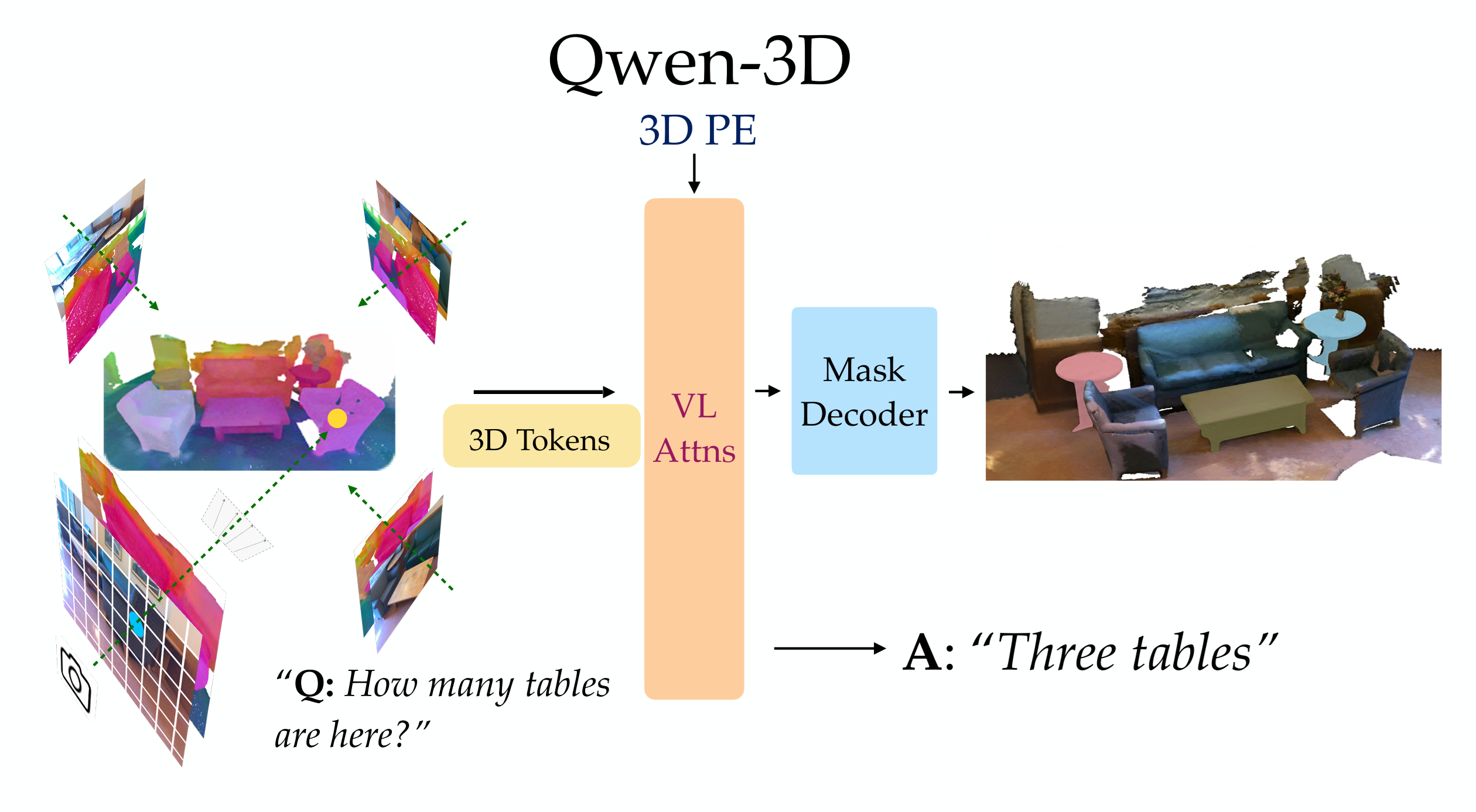
Qwen-3D: A Generalist 3D Vision-Language Model for Spatial Understanding
Lucy Lin*, Ayush Jain*, Yifan Liu, Katerina Fragkiadaki
- Spatial Intelligence in VLMs.
- VLMs (2025) have limited 3D abilities, especially for fine-grained tasks like object grounding.
- How can we bridge 3D perception with the language-dominant VLM, to unify 3D perception under foundational models?
- (Note) This paper goes in the opposite direction with “SandboxVLM”.
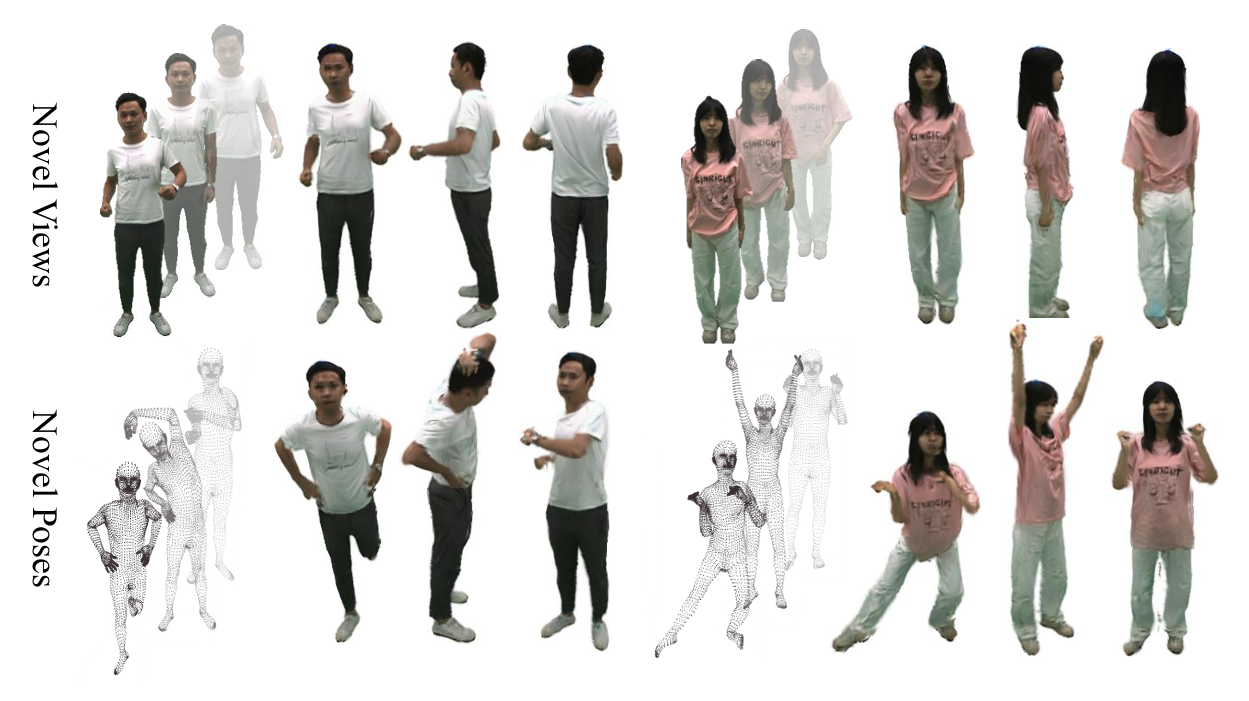
HGG: Learning Efficient and Generalizable Human Representation with Human Gaussian Model
Yifan Liu*, Shengjun Zhang*, Chensheng Dai, Yang Chen, Hao Liu, Chen Li, Yueqi Duan
- 3D Gaussian Splatting and Human Avatars.
- Generating fidelity human avatars with Gaussians seems challenging due to specific properties of human body.
- What if we see it as auxiliary information instead of a challenge? Can we leverage SMPL as a post-processing step?
- (Discussion) Would be nice to explore using SMPL in the Gaussian generation stage. Looking forward to this line of work.
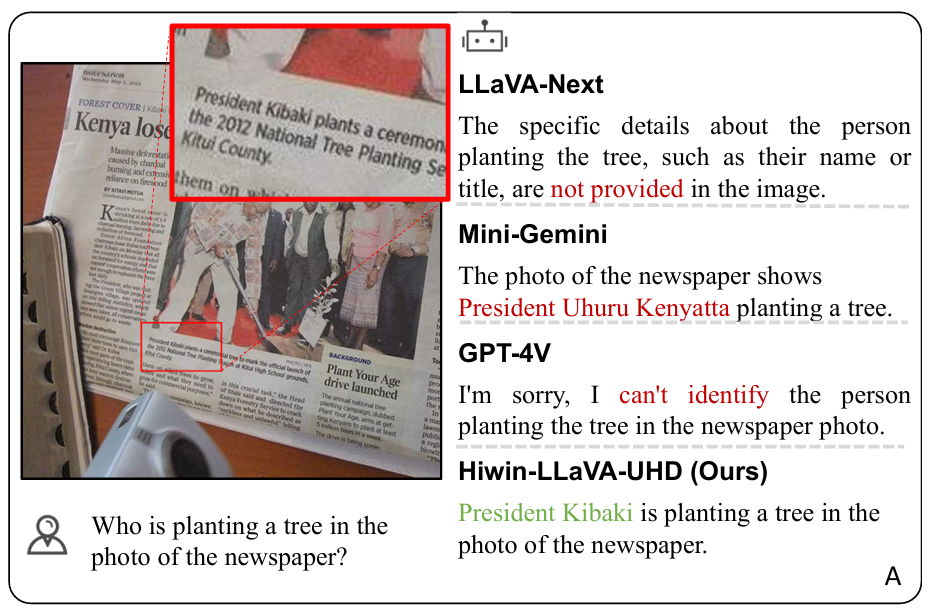
Yipeng Zhang*, Yifan Liu*, Zonghao Guo, Yidan Zhang, Xuesong Yang, Xiaoying Zhang, Chi Chen, Jun Song, Yuan Yao, Tat-Seng Chua, Maosong Sun
- VLM Basic Vision.
- VLMs (2024) often struggle with visual details.
- Is it possible to fuse different semantic levels of visual information, from original RGB to CLIP features?
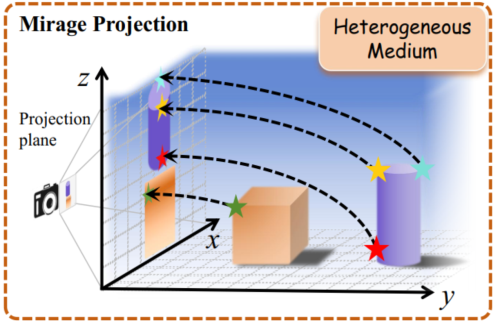
MirageRoom: 3D Scene Segmentation with 2D Pre-trained Models by Mirage Projection
Haowen Sun, Yueqi Duan, Juncheng Yan, Yifan Liu, Jiwen Lu
- 3D Point Cloud Perception.
- Using 2D models to understand rendered 3D points is promising, but occlusion is heavy so we can’t see many points.
- Can we enable “curved projection” with Mirage phenomenon to see more points?
📖 Educations
- 2026.09 - now, PhD student at Stanford University, Computer Science Department.
- 2022.08 - 2026.07, Undergraduate Student at Tsinghua University, Beijing, China. Majoring in Mathematics & Physics and Measurement Control Technology (double major).
- 2019.09 - 2022.07, High school student at No.2 High School of East China Normal University. Marvelous experience! Member of Shanghai Physics Olympiad Team and got a national 🥈 in the 38th Chinese Physics Olympiad.
💻 Internships
- Visiting Undergraduate Research Intern at VCG, Harvard University. Working on spatial intelligence with Prof. Hanspeter Pfister.
- Remote Research Intern at Computer Vision, Carnegie Mellon University. Working on 3D language grounding and vision for Embodied AI with Prof. Katerina Fragkiadaki.
- Research Intern at THUNLP, Tsinghua University. Working on basic visual architecture of Multimodal LLMs with Prof. Zhiyuan Liu.
- Research Intern at i-Vision Group, Tsinghua University. Working on point cloud perception, Gaussian reconstruction and 3D gaussian avatar with Prof. Yueqi Duan.